

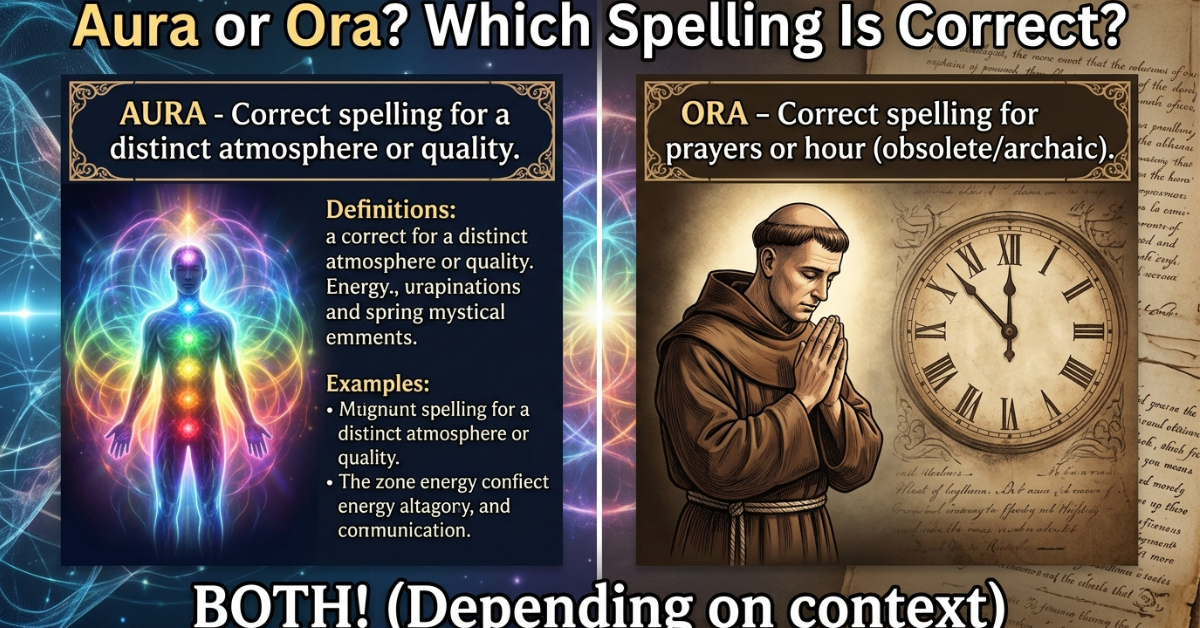
Have you ever described someone as having a certain “energy” and then wondered whether the word is spelled aura or ora? You’re not alone. These two spellings look and sound similar, but they are not interchangeable in standard English.
So, aura or ora? In most situations, the correct word is aura. It can refer to the distinctive atmosphere, feeling, or quality surrounding a person, place, or thing. It can also have specific meanings in medicine and spirituality.
In this guide, we’ll look at the difference between aura and ora, their meanings, pronunciation, examples, and why people sometimes confuse them.
Aura or Ora: Which One Is Correct?
If you are trying to describe someone’s presence, atmosphere, or distinctive energy, aura is the correct spelling.
Aura is a standard English word, while ora is not normally used as a substitute for it in everyday English.
For example:
- Correct: She has a calm and peaceful aura.
- Correct: The old building has a mysterious aura.
- Incorrect: She has a calm and peaceful ora.
The confusion usually comes from pronunciation. Depending on the speaker’s accent, aura can sound somewhat like “ora,” making it easy to spell incorrectly.
What Does Aura Mean?
The word aura has several related meanings depending on the context.
In everyday language, an aura is the particular feeling, atmosphere, or impression that seems to surround a person or place.
For example:
“He has an aura of confidence.”
This means that the person gives off a strong impression of confidence.
The word can also describe the atmosphere surrounding a place:
“The restaurant has a warm and welcoming aura.”
Here, aura refers to the overall feeling or atmosphere of the restaurant.
Aura Meaning in Spiritual Contexts
In spiritual or metaphysical discussions, an aura is often described as an energy field surrounding a person or living thing. Different traditions may associate different colors with particular emotions, characteristics, or states of being.
However, these spiritual interpretations are matters of belief rather than established scientific fact.
Aura Meaning in Medicine
In medicine, particularly neurology, aura has a more specific meaning. An aura can refer to a group of sensory or neurological symptoms that may occur before or during certain conditions, including some migraine attacks and seizures.
Depending on the condition, symptoms can include:
- Seeing flashes or patterns
- Temporary visual changes
- Tingling or numbness
- Changes in hearing or sensation
- Difficulty speaking
Medical aura is therefore quite different from the everyday idea of someone’s “energy” or presence.
What Does Ora Mean?
The word ora does exist in some languages and specialized contexts, but it generally isn’t the correct English spelling when you mean someone’s atmosphere, presence, or energy.
For English speakers, ora is often simply a misspelling or phonetic spelling of aura.
There are also words from other languages that look or sound like ora. For instance, Latin ora can have meanings related to a coast, shore, or border depending on the grammatical context. That does not make ora an alternative spelling of the English word aura.
Aura vs. Ora: Quick Comparison
| Word | Common English use | Meaning |
| Aura | Yes | A distinctive atmosphere, quality, or impression |
| Ora | Not as a synonym for aura | Used in certain languages or specific contexts |
| Aura in medicine | Yes | Neurological symptoms associated with certain conditions |
| Aura in spirituality | Yes | A supposed energy field surrounding a person |
So, if you’re writing a sentence about someone’s presence or the feeling surrounding a place, choose aura.
Why Do People Confuse Aura and Ora?
The main reason is pronunciation.
The beginning of aura can sound like “or” or “aw,” depending on the speaker’s accent and pronunciation. Because the word isn’t pronounced exactly as it looks, people sometimes write it as ora.
Another reason is that aura is relatively uncommon in everyday formal writing. People may recognize the word when they hear it but aren’t sure how to spell it.
A simple way to remember it is:
Aura = atmosphere or distinctive presence.
If you’re talking about the feeling someone or something seems to give off, aura is almost certainly the word you want.
Examples of Aura in a Sentence
Here are some natural examples showing how aura is used:
- She has a friendly aura that makes people feel comfortable.
- The room had an aura of elegance and sophistication.
- There was an aura of mystery surrounding the abandoned house.
- His confident aura made him stand out during the interview.
- The quiet library has a peaceful aura.
- The artist’s work creates an aura of nostalgia.
- She noticed visual changes during the aura that preceded her migraine.
These examples show that aura can describe both an impression or atmosphere and, in medical contexts, a specific set of symptoms.
Aura Synonyms and Related Words
Depending on the sentence, you may be able to replace aura with another word.
Some related words include:
- Atmosphere
- Ambience
- Presence
- Vibe
- Energy
- Feeling
- Mood
- Impression
- Character
- Quality
These words are not always exact synonyms. For example, ambience usually describes the atmosphere of a place, while presence can describe the noticeable quality of a person.
Is Aura a Positive or Negative Word?
Aura itself is neutral. Its meaning depends on the words surrounding it.
For example:
- An aura of kindness → positive
- An aura of confidence → positive
- An aura of mystery → neutral or intriguing
- An aura of sadness → negative or emotional
- An aura of danger → negative
So, an aura doesn’t automatically mean something positive. It simply describes a noticeable quality, feeling, or atmosphere surrounding someone or something.
Aura or Ora: Easy Way to Remember
If you’re still wondering aura or ora, use this simple rule:
When you mean a distinctive atmosphere, energy, or presence, spell it A-U-R-A: aura.
Think of phrases such as:
- Aura of confidence
- Aura of mystery
- Aura of peace
- Aura of elegance
- Aura of danger
The spelling ora should not be used as a casual alternative to aura in standard English.
Frequently Asked Questions
Is it aura or ora?
Aura is the correct spelling when you mean a distinctive atmosphere, feeling, quality, or presence surrounding a person or thing. Ora is not a standard alternative spelling of aura in everyday English.
What is the meaning of aura?
Aura can mean a distinctive feeling, atmosphere, or quality that seems to surround someone or something. In medical contexts, it can also describe certain neurological symptoms that occur before or during conditions such as migraine or seizures.
How do you pronounce aura?
Aura is commonly pronounced something like “OR-uh” or “AW-ruh,” depending on the speaker and accent. This variation in pronunciation is one reason people sometimes spell it as ora.
Is ora a word?
Yes, ora can be a word in certain languages and specialized contexts. However, it is generally not the correct English spelling of aura when referring to someone’s presence, energy, or atmosphere.
What is an example of aura?
An example is: “She has a warm aura that makes everyone feel welcome.” Here, aura refers to the pleasant impression or quality that the person seems to give off.
What is the difference between aura and vibe?
Both can describe the feeling someone or something gives off, but vibe is more informal. Aura can sound more descriptive or expressive and is also used in medical and spiritual contexts.
Conclusion: Aura or Ora?
So, aura or ora? If you’re talking about the distinctive energy, atmosphere, presence, or feeling surrounding a person, place, or thing, aura is the correct English spelling.
Although ora may appear in other languages or contexts, it shouldn’t normally replace aura in everyday English. Remember A-U-R-A, and you’ll have the spelling right.
If you’re interested in other commonly confused English words, exploring spelling differences, pronunciation guides, and word meanings can help you write with greater confidence.
Leave a comment