

You may have heard someone say “Habibi!” in a conversation, song, meme, or viral social media video and wondered what it actually means. Is it romantic? Is it something you can say to a friend? Or is it simply Arabic slang?
The Habibi meaning slang is generally connected to affection, friendship, and warmth. Originally an Arabic word, Habibi has become widely recognized around the world and is now commonly used in casual conversations, pop culture, and online communities.
Depending on the situation, calling someone Habibi can mean “my love,” “my dear,” “darling,” or even “bro” in a friendly and affectionate way.
What Does Habibi Mean?
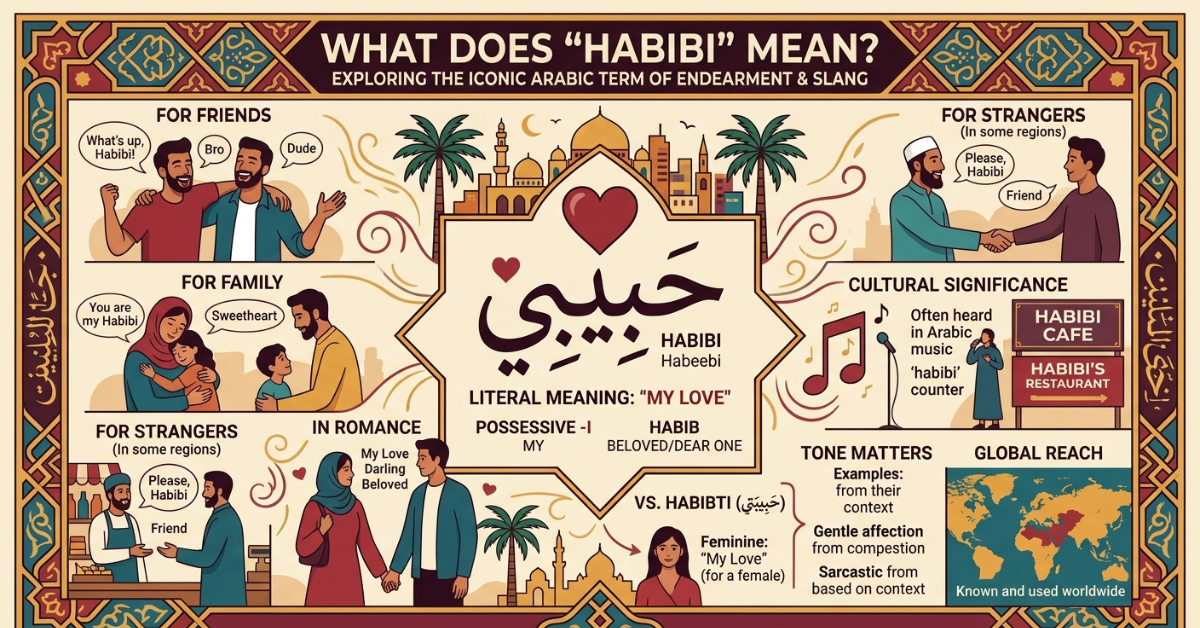
The word Habibi (حبيبي) comes from Arabic and literally carries the meaning of “my beloved” or “my dear.”
It is commonly used as a term of affection toward someone you care about. However, the exact meaning can change depending on the relationship and tone of the conversation.
For example, Habibi might mean:
- My love
- My dear
- Darling
- Sweetheart
- Dear friend
- Bro or buddy, in some casual contexts
So, while the literal translation sounds romantic, the everyday use of Habibi is much broader.
Habibi Meaning in Slang
In modern slang and casual conversations, Habibi is often used as a friendly nickname rather than a serious romantic expression.
For example, friends may jokingly say:
“Come on, Habibi!”
In this situation, it could simply mean something like:
“Come on, bro!”
Or:
“Come on, my friend!”
This is why context matters when understanding the Habibi meaning slang. The same word can sound romantic, friendly, funny, or playful depending on who is saying it.
Where Does the Word Habibi Come From?
Habibi comes from the Arabic word ḥabīb, which means beloved or dear person.
The ending “-i” gives the word a possessive meaning, essentially turning it into “my beloved” or “my dear.”
Traditionally, Habibi is used when speaking to a male. The feminine version is often Habibti (حبيبتي), meaning “my beloved” when speaking to a female.
The Basic Difference
- Habibi — commonly used for a male
- Habibti — commonly used for a female
However, people outside Arabic-speaking communities sometimes use Habibi more loosely as a general affectionate or slang expression.
Is Habibi Romantic?
Not always.
This is one of the biggest misunderstandings about the word. Although Habibi can absolutely be used romantically between couples, it can also be used between:
- Friends
- Family members
- Parents and children
- Close acquaintances
- People joking around
For example, a mother might call her son Habibi, while a friend might use it casually during a conversation.
The meaning depends heavily on tone, relationship, and cultural context.
Romantic Example
“I missed you, Habibi.”
Here, the word clearly sounds affectionate and romantic.
Friendly Example
“Habibi, relax! Everything is fine.”
Here, it may simply mean “my friend” or “dear.”
How Is Habibi Used in Everyday Conversations?
The word is incredibly flexible. In Arabic-speaking cultures, you may hear it throughout the day in conversations between people who are close or simply being warm and friendly.
Here are some common ways Habibi is used:
1. To Show Affection
People often use Habibi when speaking lovingly to someone.
Example:
“Good morning, Habibi.”
This could mean:
“Good morning, my love.”
2. Between Friends
Friends may use the word casually and jokingly.
Example:
“Habibi, where have you been?”
In this context, it can feel similar to saying:
“Bro, where have you been?”
3. To Comfort Someone
The word can also make a sentence sound warmer and more caring.
Example:
“Don’t worry, Habibi. Everything will be okay.”
4. As a Playful Slang Term
Online and among younger people, Habibi is sometimes used humorously or dramatically.
Example:
“Habibi, you have no idea what just happened!”
This playful use is especially common in memes and social media content.
Habibi Meaning on TikTok and Social Media
The popularity of Arabic music, memes, videos, and international social media has introduced Habibi to millions of people worldwide.
On platforms like TikTok, Instagram, and YouTube, people often use Habibi:
- As a funny nickname
- In memes
- In captions
- While quoting songs
- To imitate a dramatic conversation
- As a friendly way of addressing someone
Because of this exposure, the word has become part of global internet culture.
Sometimes people use it even without speaking Arabic, simply because they recognize it as a warm, affectionate, or funny expression.
What Does “Yalla Habibi” Mean?
You may also hear the phrase “Yalla Habibi.”
Yalla is another widely used Arabic expression that generally means something like:
- Let’s go
- Come on
- Hurry up
So, “Yalla Habibi” can roughly mean:
“Come on, my dear!”
or
“Let’s go, bro!”
The exact translation depends on the situation and tone.
Example:
“Yalla, Habibi! We’re late!”
Meaning:
“Come on! We’re late!”
Habibi Meaning in English
There isn’t one perfect English translation for Habibi because the word can express different emotions.
Depending on the context, the closest English meanings include:
| Habibi Meaning | Similar English Expression |
| Romantic | My love |
| Affectionate | My dear |
| Sweet and caring | Darling |
| Friendly | My friend |
| Casual slang | Bro or buddy |
This flexibility is one reason why the word is so popular.
Can You Call Anyone Habibi?
Technically, you should be mindful of context.
Although Habibi is often used casually, it is still a personal and affectionate expression. Using it with close friends may feel completely natural, while using it with a stranger could feel overly familiar depending on the culture and situation.
If you’re learning Arabic expressions, it is best to pay attention to how native speakers use the word.
Generally, Habibi Is Appropriate When:
- Speaking with close friends
- Talking affectionately with family
- Speaking romantically with a partner
- Using it playfully in an informal setting
You May Want to Be More Careful When:
- Speaking in a very formal environment
- Talking to someone you don’t know well
- Communicating across cultures where the expression may be misunderstood
Why Has Habibi Become So Popular?
The global popularity of Habibi is connected to several factors.
1. Social Media
TikTok, Instagram, and other platforms have helped Arabic words reach international audiences.
2. Music
Arabic and Middle Eastern music has introduced the word to listeners worldwide.
3. Memes and Internet Culture
People often use Habibi in funny videos, jokes, and viral content.
4. Its Friendly Sound
Even people who don’t speak Arabic often recognize Habibi as a warm and affectionate word.
The word has a memorable sound, which makes it easy to use and recognize online.
Habibi vs. Habibti: What’s the Difference?
One common question is whether Habibi and Habibti mean the same thing.
They are closely related but traditionally used differently.
Habibi
Usually used when addressing a male.
Meaning: My dear, my love, my beloved.
Habibti
Usually used when addressing a female.
Meaning: My dear, my love, my beloved.
If you’re unsure which word to use, remember that Arabic has grammatical gender distinctions that may not exist in English.
Examples of Habibi in a Sentence
Here are a few examples to help you understand how the word works in conversation.
Romantic:
“I love you, Habibi.”
Friendly:
“Habibi, come sit with us!”
Funny:
“Habibi, what are you doing?”
Caring:
“Don’t stress, Habibi. We’ll figure it out.”
Casual slang:
“Yalla, Habibi, let’s go!”
As you can see, the word changes meaning slightly depending on the situation.
Is Habibi Used Only by Arabic Speakers?
No. While Habibi originates from Arabic and remains deeply connected to Arabic-speaking cultures, the word is now recognized internationally.
People from many different backgrounds use it online, in music, and in casual conversations.
However, it’s always good to understand and respect the word’s cultural origins rather than treating it as just a random internet slang term.
Knowing the real Habibi meaning slang helps you use it more naturally and appropriately.
Common Misunderstandings About Habibi
Habibi Always Means “Boyfriend”
This is false. Habibi can be romantic, but it can also be used for friends and family.
Everyone Uses Habibi the Same Way
Not necessarily. Arabic-speaking countries and communities may have different cultural habits and levels of formality.
Habibi Is Just Internet Slang
While it has become popular online, Habibi is a real Arabic term with a long cultural and linguistic history.
Frequently Asked Questions About Habibi Meaning Slang
What does Habibi mean in slang?
The Habibi meaning slang can be “my dear,” “my love,” “bro,” “buddy,” or “my friend,” depending on the context. It is often used affectionately or playfully.
Does Habibi mean boyfriend?
No. Habibi does not specifically mean “boyfriend.” It means something closer to “my beloved” or “my dear” and can be used for friends, family, or romantic partners.
Can a girl call a guy Habibi?
Yes. Traditionally, Habibi is commonly used when addressing a male, so a girl can call a male Habibi depending on the relationship and context.
Can you call a girl Habibi?
Traditionally, Habibti is used when addressing a female. However, online slang sometimes uses Habibi more loosely.
What does Yalla Habibi mean?
Yalla Habibi generally means something like “Come on, my dear!” or “Let’s go, bro!” depending on the context.
Is Habibi Arabic slang?
Habibi is an Arabic word rather than slang in the strict sense. However, it is often used casually and has become popular as slang in international online culture.
Is Habibi romantic?
It can be romantic, but not always. Friends and family members also use Habibi as an affectionate expression.
Conclusion
The Habibi meaning slang goes far beyond a simple translation. While the word originally means something close to “my beloved” or “my dear,” its everyday meaning can range from romantic and affectionate to friendly, funny, and casual.
Whether someone says Habibi to a partner, friend, family member, or jokingly in a TikTok video, the context makes all the difference. That’s what makes this Arabic expression so versatile and widely loved around the world.
So, the next time you hear someone say “Yalla, Habibi!”, you’ll know that it could mean anything from “Come on, my friend!” to “Let’s go, my dear!”
If you enjoy learning about popular expressions and internet language, explore other slang terms and cultural phrases to better understand how words change meaning across social media and everyday conversations.
Leave a comment